

ICONLOOP and Jeju Province Lead Tourism Quarantine with a Blockchain DID Identity Verification System
- – Presenting a leading model for tourism quarantine verification that lets people travel with confidence, built on blockchain technology specialized in privacy protection
- – Simple for both users and businesses, requiring nothing more than a QR code scan
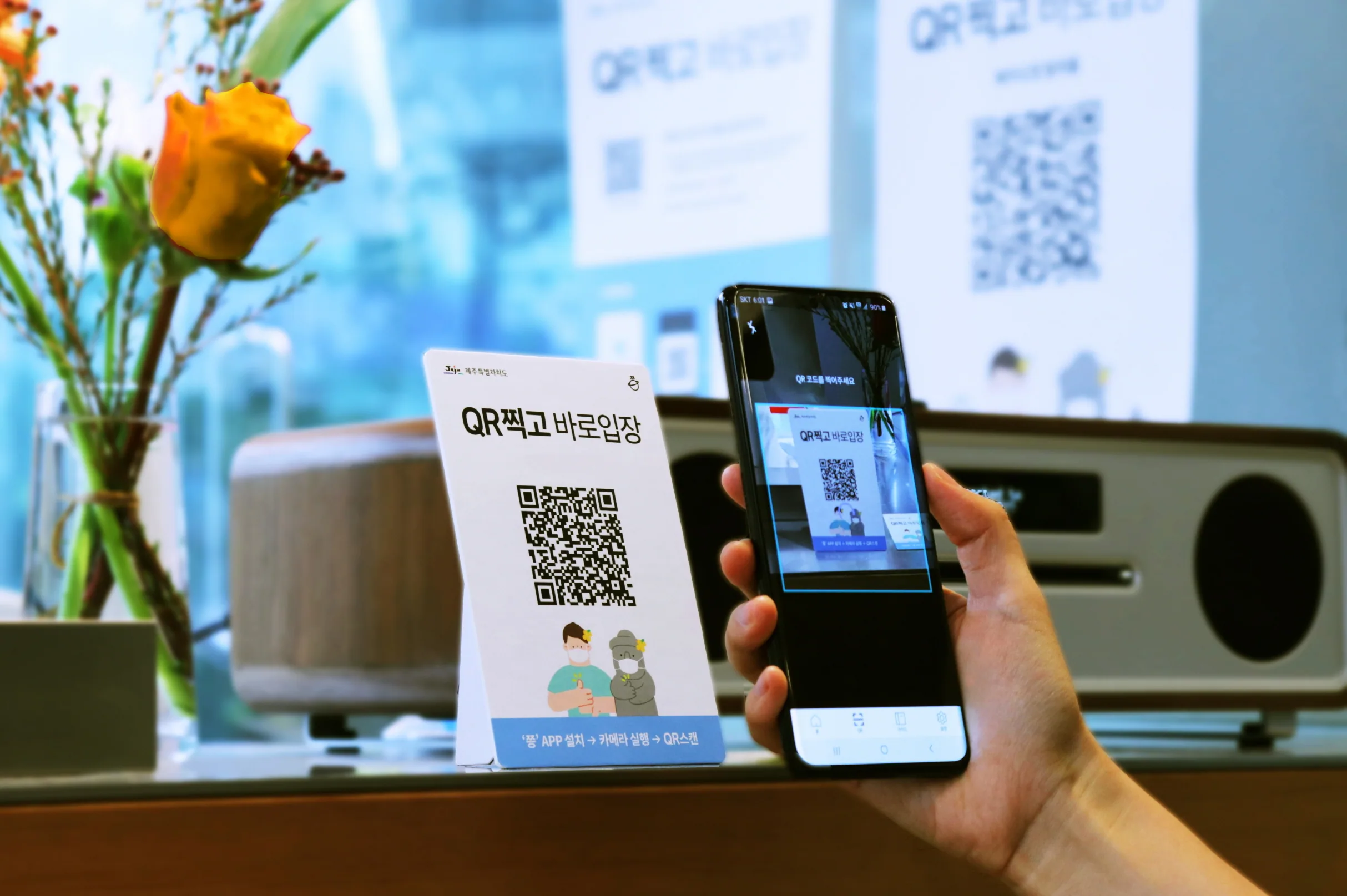
August 19, 2020, Seoul — ICONLOOP (CEO JH Kim), a leading Korean blockchain company, is setting out to lead tourism quarantine together with Jeju Province. ICONLOOP and the Jeju Special Self-Governing Province announced that on the 19th they signed a memorandum of understanding (MOU) on building and growing a blockchain DID-based tourism quarantine system for Jeju.
As the era of everyday-life quarantine has arrived, Jeju — a leading Korean destination with a constant flow of visitors — has keenly felt the importance of stronger quarantine measures. Visitor numbers, which had fallen because of COVID-19, are rising again with the peak travel season, and normalizing the tourism market is indispensable to reviving a contracted local economy. In early July, the province discussed and announced quarantine measures for the peak tourist season through the 5th Jeju Everyday-Life Quarantine Committee, aimed at preventing the spread of COVID-19 while providing a safe environment for holidaymakers.
Now, having devoted itself fully to COVID-19 quarantine, Jeju is partnering with ICONLOOP to take a step beyond its existing approach and become a safer, cleaner "clean zone." ICONLOOP and Jeju Province plan to unveil a blockchain DID-based tourism quarantine system for the island this month, presenting a leading model for tourism quarantine that lets visitors travel with confidence.
The system's defining feature is the application of blockchain-based DID (Decentralized ID) technology to maximize privacy protection and user convenience. The tourism quarantine credential issued through the system is encrypted and kept in a secure area of the user's device, and at the point of QR verification the blockchain checks the de-identified information for tampering, keeping personal data thoroughly protected. As a result, a visit authentication (verified identity information) issued once can be reused easily, without the inconvenience of re-authenticating or regenerating a QR code every time the user enters a venue.
Unlike a local community where the same residents mostly come and go, Jeju sees a heavy inflow of outside visitors who often concentrate at tourist sites and restaurants, so queues and the need to assign extra staff can weigh on any system rollout. Because the Jeju tourism quarantine system has visitors scan a QR code placed at the venue themselves, placing several QR codes allows fast authentication without waiting or lining up. Business owners, for their part, need neither equipment such as QR scanners nor dedicated staff, and carry no burden of collecting or managing personal data.
Personal identity information and visit records are kept separate so that individual privacy is not infringed, and are combined only when a case is confirmed, allowing movements to be traced quickly and accurately.
Beginning today, ICONLOOP and Jeju Province will run a test covering public officials entering the provincial government building, followed within August by a pilot operation of the system at 50 venues near the provincial office. From early September, it will officially open to the private sector, centered on eight regional clusters across the island.
The Jeju tourism quarantine system will be built into Zzeung, ICONLOOP's DID identity verification app. Zzeung is a DID service built on the MyID platform, which has been designated an Innovative Financial Service by the Financial Services Commission (FSC) in recognition of its high convenience and security, and it is also scheduled to be used from this month as a means of non-face-to-face identity verification at commercial banks.
"At a time when we are preparing for the post-COVID era, we expect this collaboration with Jeju Province to open new ground in DID identity verification — that is, in applying blockchain technology to everyday life," said ICONLOOP CEO JH Kim. "By having large numbers of users try a safe, simple DID identity verification service for themselves on Jeju, Korea's leading destination, people will experience firsthand the practical convenience blockchain technology can bring to daily life."
—
[Appendix] Jeju Tourism Quarantine System FAQ
Q1. What benefits does blockchain DID technology bring to quarantine verification?
At the point of visit authentication, it protects the user's privacy while also making verification more convenient.
Because the blockchain can verify whether information has been tampered with, the integrity of identity information verified once is guaranteed; and because visit authentication is carried out on the basis of encrypted information using DID technology, the user's privacy is protected.
With blockchain DID technology, visitors can complete visit authentication simply by scanning the QR code placed at the venue, without having to go through mobile phone identity confirmation and QR code generation on every visit.
Q2. How is user privacy protected?
The Jeju tourism quarantine system uses DID (Decentralized ID) technology at the point of visit authentication: de-identified information stored on the user's own device is verified against the blockchain to confirm it has not been tampered with before it is submitted, minimizing exposure of personal data.
In addition, all identity information and visit records stored on servers are encrypted and physically distributed across separate storage, protecting individuals' visit histories from exposure.
Q3. How is the personal data collected protected and managed?
The identity information and visit records collected are encrypted and stored in physically distributed form, and only authorized personnel at the relevant health authorities — such as epidemiological investigators of the Jeju Special Self-Governing Province — may access personal data, on the basis of the Infectious Disease Control and Prevention Act. The information collected is also destroyed automatically after a set period (identity information is kept for 8 weeks and visit records for 4 weeks, taking the epidemiological investigation period into account). No personal data whatsoever is placed on the blockchain.
Q4. How is the possibility of someone using another person's information at the point of QR verification prevented?
Fingerprint authentication or a 6-digit PIN at the point of QR verification prevents fraudulent authentication such as impersonation in advance.
Q5. How can a venue confirm whether a visitor (user) has completed visit authentication?
It can be confirmed through the usage history function within the user's app.
Q6. What is the current status of the Jeju tourism quarantine system, and what are the plans for expanding the service?
After the pilot test with public officials entering the provincial office, feedback will be incorporated and improvements made, and the Jeju tourism quarantine system will launch in earnest at 50 private venues within August. Between September and October, work will also begin on advancing the system to reflect additions and improvements such as a user rating function.
Q7. Cooperation from users and business owners seems essential to making the system work. How will that be addressed?
At the provincial level, ongoing education, guidance, and promotion for business owners will build a shared understanding. Since no separate equipment such as a QR scanner is required, visit QR posters and stands will be produced and supplied for each venue so that businesses can adopt the system without difficulty.
For tourists, the main users, the province will encourage installation in advance by linking the system with the special island entry procedure, while raising participation through active marketing in cooperation with tourism-related departments and agencies.
Specific promotional strategies and other details will be announced when the service launches in earnest for private venues.
Q8. How can users who cannot complete mobile phone identity authentication (those without a mobile phone, older users, foreign nationals) use the service?
For users who cannot obtain Jeju tourism quarantine verification (for example, users of certain handsets such as 2G phones, those without a mobile phone, older users, and foreign nationals), handwritten logs will be used as a supplement.
Q9. How will the system be linked with KI-Pass and the quarantine services of other local governments currently in operation?
Once the Jeju tourism quarantine system is established, the province will consult with the relevant departments with a view to consolidating into this system and managing it thereafter.
* Note: for high-risk facilities designated as subject to mandatory application, the government currently "recommends" adoption in the case of facilities and local governments already using their own systems.
Q10. When a case is confirmed, what is the tracing process?
Within the existing case-tracing process under the Infectious Disease Control and Prevention Act, the Jeju tourism quarantine system is expected to cut the time required for epidemiological investigation dramatically. When a case is confirmed, the health authorities of the Jeju Special Self-Governing Province identify the person's movements and contacts through an epidemiological investigation.
Until now, quarantine authorities have done their utmost in epidemiological investigations using every available means — statements from the confirmed case and related parties, CCTV, card transaction records, GPS — but have faced difficulties. With the Jeju tourism quarantine system in place, provincial epidemiological investigators can immediately confirm a confirmed case's visit history and contacts through the server holding those records, enabling rapid quarantine measures such as isolating contacts within a short time.
###