

A new interview with PARAMETA (formerly ICONLOOP) CEO JH Kim has just been published.
Electronic Times has published its latest interview with PARAMETA CEO JH Kim.
In it, he shares PARAMETA's perspective and direction on stablecoin adoption, along with PARAMETA T, the stablecoin platform the company is currently building.
Here is the full piece.
[People] PARAMETA CEO JH Kim: Stablecoin Adoption Has to Come with a Debate on Institutionalizing the Technology
"Korea's won-denominated stablecoin market only rates about a 50 out of 100 right now. The policy discussion around adoption is lively enough — that's the 50 — but there is essentially no examination of the technology or the platforms underneath it, and that's a zero."
PARAMETA CEO JH Kim argues that the rules for issuing and circulating stablecoins domestically have to be debated together with what he calls institutionalizing the technology. Supervisory functions, he says, need to be built into the design from the very beginning, so that the stability and reliability of the technology and platforms can be verified and codified to a level where not just individuals but companies can use them.
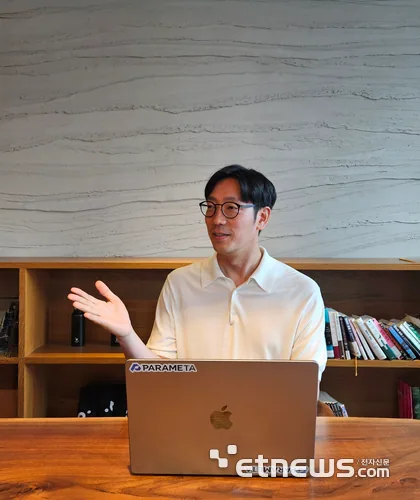
"The United States regulates by exception, so its rules keep up with the pace of the technology to a degree. Korea regulates by permission, which is comparatively slower — all the more reason to start the conversation about institutionalizing the technology quickly," he stressed.
PARAMETA, founded in 2016, is a blockchain technology company. It has proven out blockchain across a range of industries, including the Gyeongsangbuk-do provincial resident card program, which uses blockchain to make digital identity verification both safer and easier. The company also offers PARAMETA T, a comprehensive management service covering stablecoin issuance, lock-up, distribution and circulation monitoring.
Kim expects that once won-denominated stablecoins become usable in the corporate market, payment and settlement operations will get faster and more efficient right away.
"Today's payment structure requires a whole cast of players — credit card companies, PG providers, supervisory bodies — and that costs both money and time," he said. "A stablecoin is itself the ledger, so cross-border remittances that can take up to five business days become real-time settlement and payment, and the flow of funds can be monitored far more transparently."
He also sees a positive knock-on effect for the artificial intelligence (AI) industry. "For AI to grow, data matters, and that calls for a system where data can be used freely on a blockchain foundation," Kim said. "If Korea doesn't prepare a blockchain platform it has governance over — ready for an era of AI agents talking to each other and AI making payments on its own — then no matter how competitive our AI is, we'll end up at the mercy of overseas platforms."
Kim reads won-denominated stablecoins as a way to raise the won's standing in global markets, too.
"If tourists used a won stablecoin, or if it were issued as a local currency with benefits attached, usage would pick up," he said. "And even if an attempt like that fails, the downside is almost nil while the upside is a stronger won — which makes it worth trying."
He was emphatic on one more point: the current wave of discussion around stablecoin adoption is "the last chance for Korea's digital asset industry to grow."
https://www.etnews.com/20250702000220
Web3 Enabler, PARAMETA