

The latest interview with PARAMETA CEO JH Kim, conducted with Decenter, is out.
The latest interview with PARAMETA CEO JH Kim, conducted with Decenter, has been published. Take a look at the article for the platforms and services PARAMETA is currently preparing, and the direction the company is taking this year.
- PARAMETA CEO JH Kim: this year's key theme is blockchain combined with AI [Decenter interview]
- Securing trust in AI with blockchain — token rewards, too
- Watching the CDP market, where people share their own data voluntarily
- Preparing to join the KBTF program and to work with local governments
What happens when you put together blockchain and artificial intelligence (AI), the two standard-bearers of the Fourth Industrial Revolution? PARAMETA CEO JH Kim expects blockchain, with transparency as its strength, to raise the level of trust in AI. Meeting at PARAMETA's office in Jung-gu, Seoul on the 7th, Kim explained that as protecting and managing personal data grows more important, blockchain can let website users see transparently where their own data goes and how it is used. PARAMETA is a first-generation Korean blockchain technology company. Through loopchain, the blockchain engine it developed in-house, and its core technologies, it has supplied technology across a range of Web3 fields including decentralized identifiers (DID), wallets, and decentralized finance (DeFi).
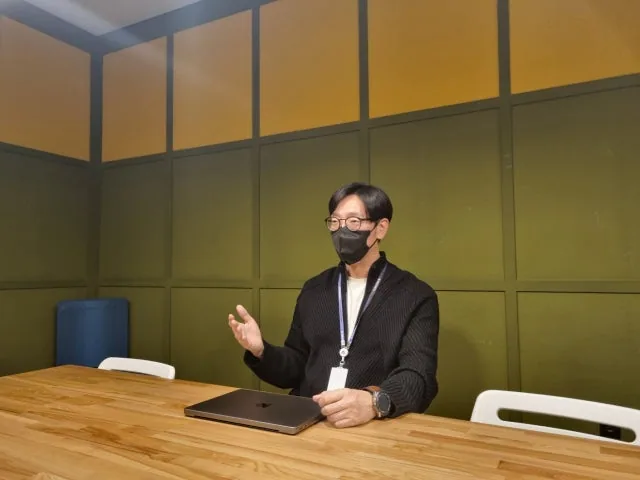
Raising trust in AI with blockchain — this year's key theme
PARAMETA points to the combination of blockchain and AI as the crux of the blockchain industry this year. The transparency of blockchain can be used to establish trust in the data an AI has learned from. As Kim put it: until now, there has been no way to know what data an AI such as ChatGPT was trained on, so you simply have to take the results on faith. But connect the AI neural network responsible for that training to a blockchain, and you can see exactly what data it learned from. It also becomes possible to limit an AI to learning from data only a set number of times, or to block it from learning from data such as adult content.
Users who supply data to an AI could be rewarded with tokens as well, since the more data an AI learns from, the more accurate it becomes. Token rewards and the contribution measurement they require have already been researched extensively in blockchain, Kim added, so they can be applied efficiently.
Interest in the customer data platform market — easier management of personal data
Kim also expressed interest in the customer data platform (CDP) market. Global information technology (IT) companies such as Google and Apple have been moving to restrict the tracking of cookies, which record things like which websites a user visits and how long they stay. Cookies are a kind of user data that companies have used for marketing, and as they become harder to obtain, demand has grown for platforms on which users distribute their data voluntarily.
Companies now have to obtain user information directly, Kim explained, so the CDP market will grow — and that calls for a structure in which users share their data themselves. Privacy, he stressed, is less about hiding information outright than about disclosing it only to the parties you choose, and blockchain is the best fit for managing and controlling personal data transparently.
Focusing on removing friction for users — working with local governments through KBTF
In the end, what matters is a service that users can easily use and feel the benefit of. That is Kim's guiding principle. This year, he said, the focus will be on making blockchain easy for private companies and users to approach and on removing the friction they run into — which means delivering wallets, bridge technology, and the like at a level ordinary users can handle. As part of that, PARAMETA plans to extend the blockchain-based EV battery remaining-life certification business it ran for corporate clients last year to consumers. Consumers will be able to manage their own battery data, Kim added, and he would like to create cases where EV battery and driving data are shared with insurers and others.
PARAMETA also plans to work with local governments through the Korea Blockchain Trusted Framework (KBTF), a program driven by the Ministry of Science and ICT. KBTF is a kind of blockchain-as-a-service (SaaS) platform certified by the ministry: local governments can readily procure, through the Public Procurement Service, technology that blockchain companies have registered with KBTF. PARAMETA is preparing to take part in the KBTF program this year. Most local governments use private blockchains, Kim noted, which makes blockchain projects expensive and long-term planning difficult — so being able to use government-certified blockchain easily and cheaply should make their projects far more efficient.
Source: Decenter, reporter Jaeheon Choi (February 13, 2024)
Read the full interview ▼
Web3 Enabler, PARAMETA