

PARAMETA joined ETRI's blockchain stored-data scaling technology project as a co-research institution.
PARAMETA took part in the Blockchain Stored-Data Scaling Technology development project run by the Electronics and Telecommunications Research Institute (ETRI) as a co-research institution, collaborating on technology that solves blockchain's data storage scalability and analysis efficiency problems.
The technology is the outcome of two research tasks under the Ministry of Science and ICT (MSIT) — the Blockchain Technology Development Project for the Data Economy, and Blockchain Data Management Technology for Data Sovereignty. Alongside PARAMETA, the co-research institutions were Jeju Self-Governing Province, Seoul National University, Sogang University, POSTECH, CityLabs, and BI Matrix. The research kept what makes a blockchain platform valuable — records that cannot be altered or deleted — while focusing on overcoming its limits: duplicate storage, slow speed, and one-size-fits-all search. We expect it to take blockchain technology, which has only really shone in a few narrow fields, and open it up to entirely different areas such as monitoring disease in fish.
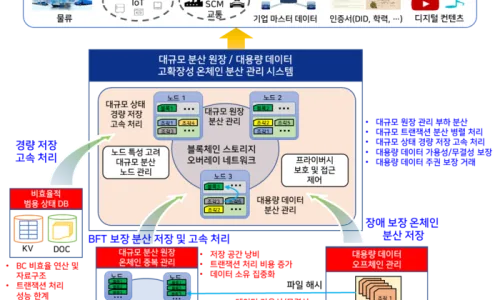
In this research, PARAMETA co-developed the blockchain stored-data scaling technology with ETRI on top of IPFS (InterPlanetary File System, a distributed file system). Building on ETRI's research findings, we improved IPFS and applied it to the development of BFS (Blockchain File System), which we will continue to advance.
Want more detail on BFS? You can find it in the PARAMETA technical post linked below. BFS is a decentralized storage layer made available for use from blockchain smart contracts, and the decentralized storage solution in our own blockchain framework, PARAMETA Framework, uses BFS to store encrypted data in a distributed way. Strengthening decentralization raises security substantially, which adds real utility to how blockchain technology gets used. PARAMETA is continuing to advance the technology with ETRI, and is already applying it to services such as the Web3 data protocol Perme and the battery remaining-life certification service WattEver.
[Reference] Read the related post ▼
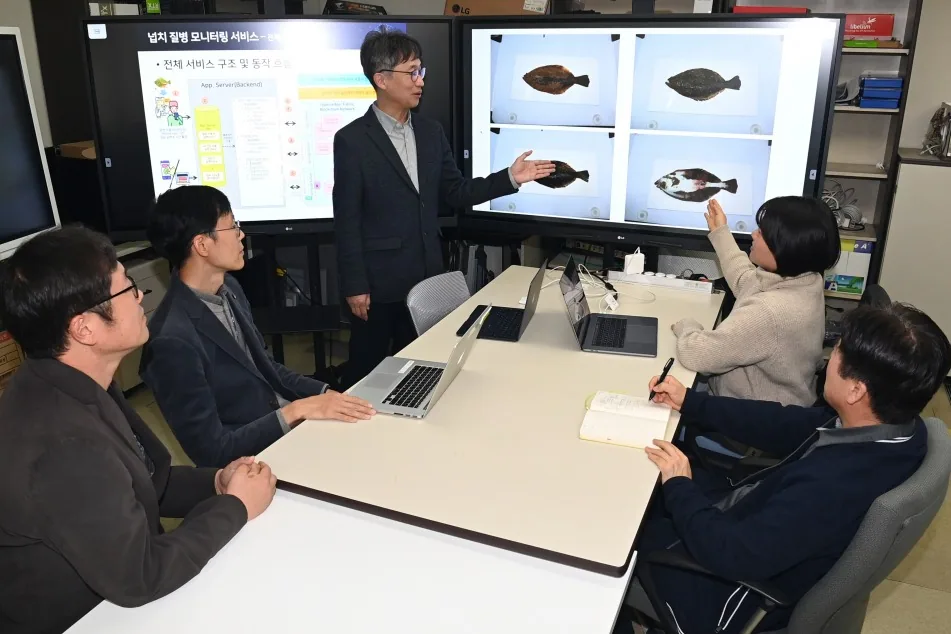
The research team, PARAMETA included, plans to put the newly developed technology to work across a variety of fields. The first case: a fish disease monitoring service developed with the Jeju Fisheries Research Institute, whose proof-of-concept results were presented this past November.
We expect the ripple effects of this work to be significant, so keep an eye on where it goes next.
[Reference] Read the related coverage ▼
Web3 Enabler, PARAMETA