

On September 15, the Merge — the first step in the Ethereum 2.0 roadmap, switching Ethereum's consensus from proof of work (PoW) to proof of stake (PoS) — went through.

Ethereum's move to proof of stake is one of the biggest milestones on the Ethereum roadmap, and it has been under research since before Ethereum even launched. It is expected to bring down both transaction fees (gas) on the Ethereum network and electricity consumption. From a technical standpoint, it also guarantees block finality — which means the connection with PARAMETA's interchain protocol BTP (Blockchain Transmission Protocol) can now begin in earnest.
What Is Finality?
Finality means an irreversible state in which a transaction record cannot be rolled back or altered. In other words, once a transaction is recorded on a node, the transaction itself can no longer be changed or invalidated — the settlement is complete.
In finance, finality is a core basis for transactions, because a payment and settlement system can keep operating normally even if a financial institution goes under.
For the same reason, a blockchain needs block finality: the guarantee that a transaction record, once created, cannot be cancelled or modified. With PoW, however, the nature of the consensus mechanism puts a limit on how much you can trust that finality.
Finality in PoW
Under PoW, when several miners' nodes produce blocks at the same time, node A may create a block first, but differences in data transmission time between nodes can still cause the chain to fork alongside node B, which produced its block slightly later. Whichever chain becomes the longest one fastest then becomes the main chain (the Longest Chain Rule). If chain A grows longest and becomes the main chain, chain B disappears — and with it, the transaction records on chain B can be changed or invalidated. That makes block finality hard to secure.
To prevent this, PoW chains wait a set number of blocks after a transaction is confirmed before treating settlement as final: 6 confirmations for Bitcoin (60 minutes = 10 minutes x 6 blocks) and 25 for Ethereum under the old PoW model (14 seconds x 25 blocks). That provides only probabilistic finality, leaving open the possibility of a roll back — an element of uncertainty when applying BTP.
ETHEREUM2.0 & BTP
Under PoS, validators produce a fixed number of blocks in each interval, and when more than two thirds of the validators in that interval approve a given block, the block is finalized — securing the finality that proves the transaction has not been tampered with.
Now that Ethereum has secured finality with this 2.0 update, BTP is likewise preparing in earnest to connect to Ethereum. BTP is an interchain protocol that can connect any blockchain supporting smart contracts, not only chains of the same type but heterogeneous ones such as ETH, BNB and DOT. With the Ethereum 2.0 upgrade a success, the plan is to optimize for the new consensus algorithm and build out the connection accordingly.
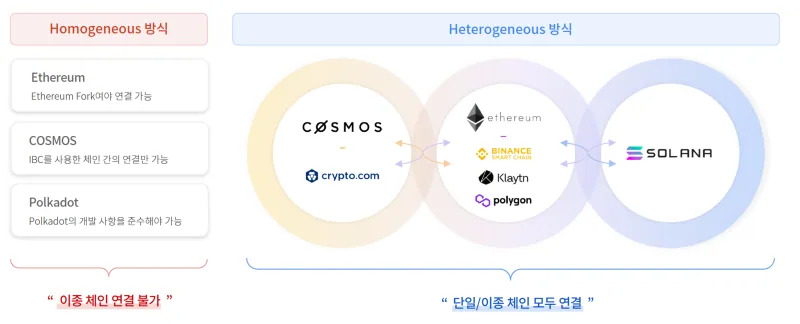
Going forward, BTP will be commercialized through HAVAH, currently being developed on PARAMETA's blockchain framework, and through ICON, which PARAMETA supports technically in its capacity as a tech company. By connecting multiple chains so that people can use services freely regardless of which chain they are on, we will keep building toward our vision: Hyperconnect the World.
Web3 Enabler, PARAMETA