

Since PARAMETA, the blockchain framework that lets you build your own optimized blockchain mainnet, was unveiled this past June, many of you have written in with questions and asked for more detail.
Beyond the introductions to PARAMETA that have already appeared in the press, this post walks through the background and purpose behind the framework's release, and what sets it apart.
PARAMETA is a blockchain framework that makes it easy to build a blockchain mainnet.
The name carries two meanings. It joins "Para" from Parallel with "Meta" from Metaverse — Parallel Blockchains for Metaverse — a world in which one mainnet is created for each metaverse and many mainnets run independently side by side. It also reads as a framework where you can stand up a blockchain simply by setting parameters, which captures exactly how easily a mainnet can be built with it.
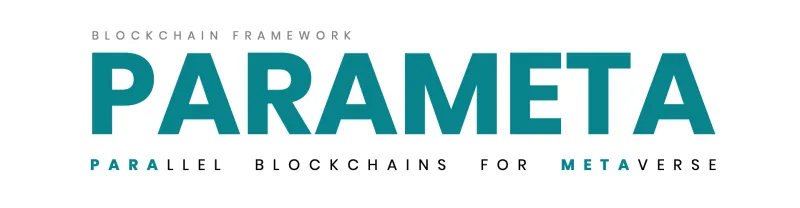
Where PARAMETA came from...
More and more projects have been moving to build their own mainnets lately.
Most of them are projects that used to issue and use tokens on a major L1 (Layer 1) chain such as Ethereum or Klaytn, and they now feel a strong need for a chain of their own. Yuga Labs and Dapper Labs, both well known for NFTs, and the game platform WEMIX have all declared their own mainnets.
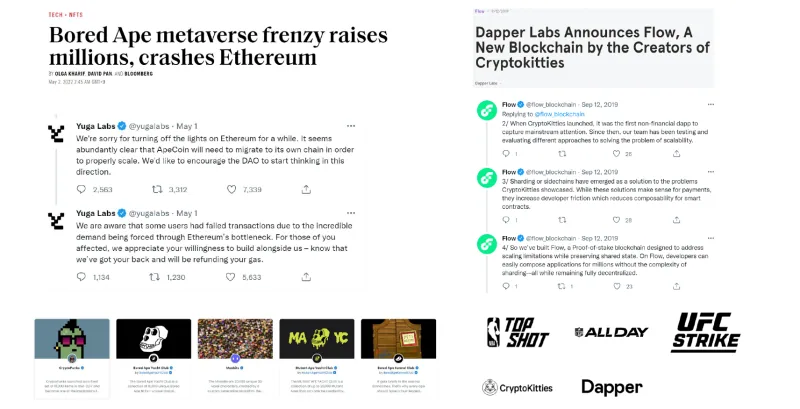
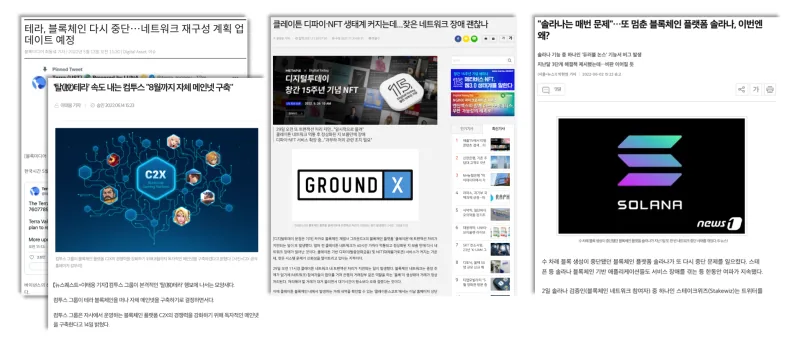
Why the shift? When a crowd of DApps all sit on a single mainnet platform (Ethereum, Solana, Klaytn and the like), one service ends up affected by what another DApp is doing, or suffers an outage caused by the mainnet itself.
For a business operating a service, an outage it cannot control is maddening. Wanting a mainnet where you can respond to incidents yourself is the main driver.
Then there is customization. General-purpose DApp platforms can be slow, gas costs too much to implement your own business logic in smart contracts alone, or the logic really belongs inside the chain itself — all reasons to want a dedicated mainnet.
In other words, expecting one platform to satisfy the requirements of every kind of DApp service never made sense in the first place, so a proliferation of mainnets looks inevitable.
Realistically, we have already passed through the multichain era and entered the interchain era.
In the early days of blockchain, it was enough to issue a token on one chain, use a DEX, and live on an isolated network. As more chains appeared, multichain services that spanned several blockchains emerged. And now, with bridge services that move assets between all those chains multiplying, we are heading into the interchain era.
So far, though, interchain technology is used mostly for simple asset transfers — and even those bridges tend to rely on a separate validator set rather than preserving the security of the underlying blockchains, which weakens security and has raised real concerns about interchain in general.
Still, a diverse set of mainnets is inevitable, and connecting them is essential. Interchain technology with stronger security than what we have today has to be applied. So for any company or service that wants to build its own mainnet, the interchain technology matters just as much as the mainnet technology itself.
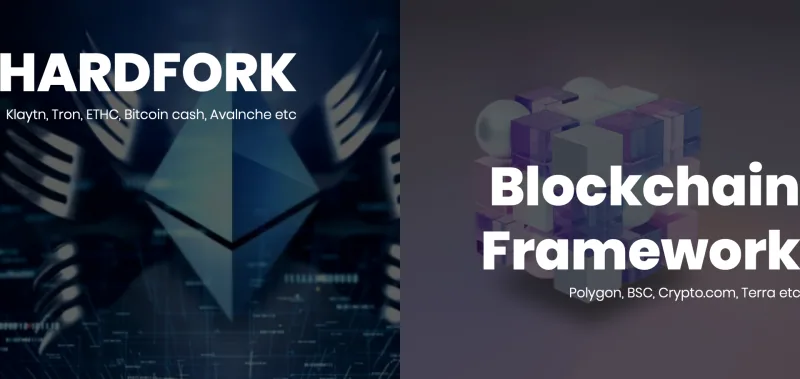
Unlike other blockchain technology companies, PARAMETA did not hard-fork an existing blockchain. It developed its mainnet on its own technology, then actually ran and expanded it, accumulating experience along the way. It also operates a dedicated blockchain research lab and leads the field across everything from foundational blockchain technology to interchain.
PARAMETA is the blockchain framework that brings all of it together — the base technology, the mainnet, the interchain layer — so you can build a mainnet with it.
What PARAMETA provides
PARAMETA provides the full stack you need to build a mainnet.
You get the blockchain core, plus the base services, development tools and management tools that run on top of it, along with consulting that reflects years of accumulated know-how so you can design governance and token economics properly.
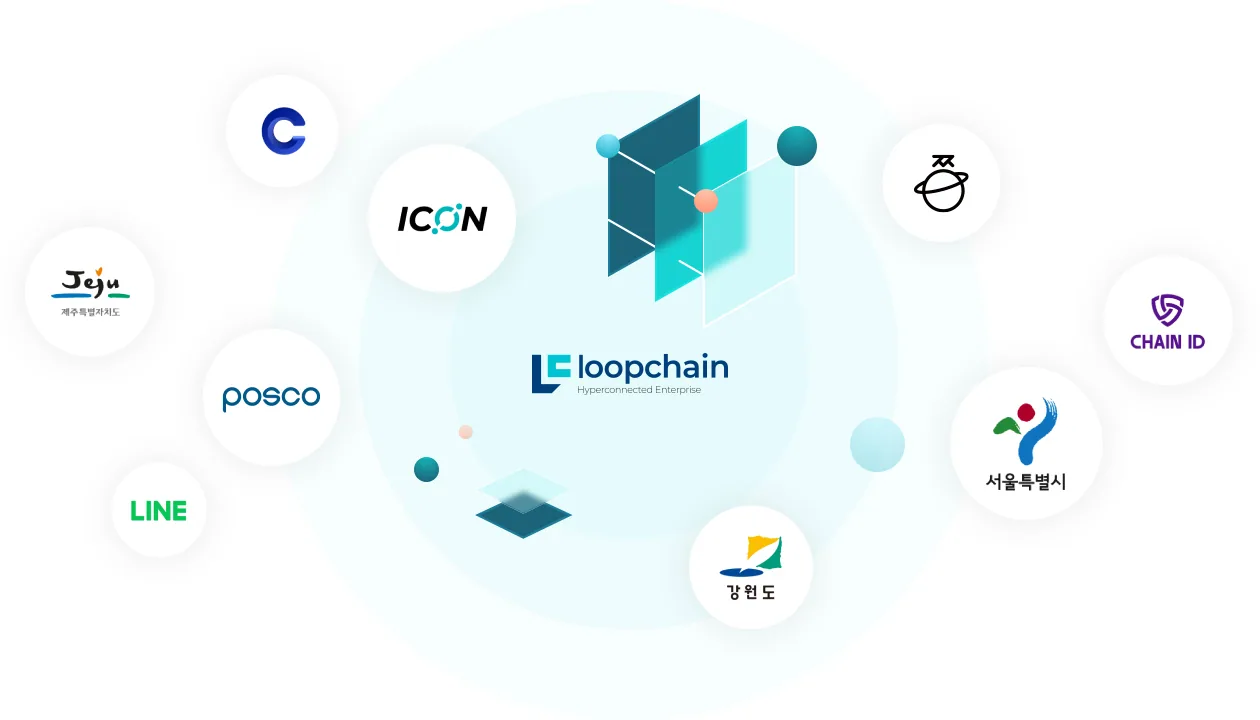
The blockchain core is loopchain, which PARAMETA has developed in-house from the very beginning. Built from scratch rather than on open source such as Ethereum or the Cosmos SDK, loopchain covers the fundamentals of a blockchain while carrying a great deal of work aimed at performance and stability. loopchain powers the ICON public blockchain and is still running there today, and it has been used widely for enterprise blockchains at public institutions, including the Seoul Metropolitan Government, and at private companies such as the Korea Gold Exchange.
Blockchain nodes alone are not enough to run a mainnet of your own. At minimum you need governance, token economics for the base coin, a fee policy and a block reward policy. That is one of the main reasons teams want their own mainnet in the first place. But a policy like governance is tightly coupled to the chain's consensus algorithm and block production method.
If you build by forking Ethereum or another blockchain, you end up modifying the consensus algorithm or the core in order to create your own governance. Modifying the core like that undermines the stability of the whole chain and makes it harder to respond when something goes wrong.
Beyond that, PARAMETA offers a range of base services so your own mainnet can support many kinds of applications: Vault for private key backup and recovery, BFS (Blockchain File System) for off-chain data storage linked to on-chain records, and PDS (Personal Data Storage) for encrypting personal secrets and managing access to them.
The biggest differentiator is a bridge built on BTP (Blockchain Transfer Protocol), our own interchain technology. Being able to connect to existing mainnets and move assets across is essentially a must-have for a new mainnet.
Since a mainnet has to host all kinds of smart contracts, you also get SDKs, management tools and development tools for building and operating contracts, plus a block explorer for checking the state of the chain and much more. On that foundation, DApp-level services such as DID, NFTs and DeFi become possible.
In the next post we will look at each of PARAMETA's components in more detail.
Life Meets Blockchain, ICONLOOP

Related posts
- PARAMETA Introduction 2 - Key Components (1)
- In the previous post we covered how PARAMETA came about and how it is put together ...
- blog.naver.com
- PARAMETA Introduction 3 - Key Components (2)
- In the previous post we looked at PARAMETA's core components: the core engine, governance ...
- blog.naver.com
Web3 Enabler, PARAMETA