

With the Lunar New Year holiday coming up, a lot of the people around us seem to be planning a trip to Jeju.
With the Lunar New Year holiday coming up, a lot of the people around us seem to be planning a trip to Jeju.
OhmyNews citizen reporter Buwon Seo visited Jeju himself and wrote an article about his experience of using the Jeju Safe Code.
Our thanks for a fine piece — take a look and see through his article how COVID has changed what a trip to Jeju looks like.
Unlike back then, there is one thing everyone has to do the moment they set foot on Jeju. You pull your smartphone out of your pocket and install an app called Jeju Safe Code. Without installing this app, travelling on Jeju is effectively impossible. Not only at tourist sites — even buying an ordinary cup of coffee at a cafe is hard
OhmyNews citizen reporter Buwon Seo
Life Meets Blockchain, ICONLOOP
The first greeting on Jeju these days: Could you show me your smartphone?
[Travelling to Jeju in Times Like These, Part 1] Why Jeju's confirmed case numbers are comparatively low
Buwon Seo (ernesto)
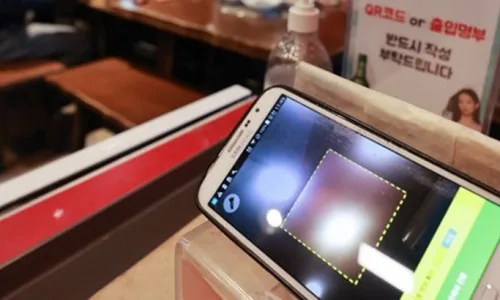
It became an escape trip without my intending it to. I went to Jeju for the first time in a while, planning to spend five days from the 15th visiting sites connected to the Jeju 4.3 incident and walking the Olle trails. I start my day by checking the number of confirmed COVID cases that shows up on my smartphone every morning, and a number I had not seen in a long time caught my eye.
Twelve. That was the number of confirmed cases in the Jeju region as of 5 p.m. on the 16th, my second day on the island. And even those were all linked to people who had visited other regions or to tourists who had come to the island. Even allowing for the fact that it was the weekend, it was astonishing that there were no infections at all among Jeju residents. At the same hour, Gwangju, the city I had left, had a full 242 cases.
When it comes to how often people come into contact with outsiders, nowhere matches Jeju. Even now, with Omicron surging, tens of thousands of tourists come and go from Jeju every day, and every tourist site on the island is thronged with people. From Gwangju alone, 16 flights to Jeju, filled with passengers, take off and land every day from morning to evening.
The Seoul-Jeju route, for that matter, carries so many passengers that some 180 flights travel back and forth every day. As is well known, it ranks an unshakable first in the world by annual number of flights. It is also famous as the only route in the world that carries more than 10 million passengers in a single year.
So why does Jeju have so few confirmed cases, incomparably fewer than any other region? Above all, the attention Jeju's people pay to infection control when dealing with tourists, and how meticulously they practise it, is striking. Indoors or outdoors, wherever you go among the tourist sites, they check your vaccination status carefully before you can buy a ticket — no exceptions.
If anything stands out, it is how often a staff member comes over and asks to see your smartphone screen so they can confirm it with their own eyes. They pay no mind to how long the line at the ticket booth grows, and there are no exceptions even in wide-open outdoor places like parks and forests. I once waited 20 minutes in a biting wind for my turn to go in.
"Could you show me your smartphone?" That was the greeting I heard most during my five days on Jeju. Honjeo opseoye, the Jeju dialect phrase of welcome, survives only as text you see on the advertising boards at the airport and the like. Indeed, whether at a restaurant or a cafe, it was rare to be greeted first with a "Welcome."
Perhaps because Jeju is a famous tourist destination that cannot help but be especially sensitive to infectious disease, everyone takes part actively, with no one holding back. Mask wearing was thorough to the point of seeming excessive. Even people walking the Olle trails alone all wore masks, and even those climbing the steep oreum did not take theirs off for a moment.
At art museums and the like, the number of people admitted at once was controlled constantly, and in crowded places announcements telling people not to take off their masks played until your ears rang. Lower your mask even briefly and you would have to accept withering looks from those around you. Even in cafes, more people than not sat with their masks on.
Until COVID, I used to go to Jeju every year as if I were coming and going from my own house. I often had personal business there, and sometimes I came along with students on school trips. Group activities have stopped altogether now, but Jeju is the school-trip destination children like most. For me personally, this was my first visit in three years, since 2019.
Unlike back then, there is one thing everyone has to do the moment they set foot on Jeju. You pull your smartphone out of your pocket and install an app called Jeju Safe Code. Without installing this app, travelling on Jeju is effectively impossible. Not only at tourist sites — even buying an ordinary cup of coffee at a cafe is hard.
Wherever you go, you have to take out your smartphone and open the Jeju Safe Code. Then you hold it up to the QR code posted at the entrance. Only after showing your vaccination record to a staff member can you finally buy a ticket or order from the menu. You are let in only once you have gone through these steps one by one.
The Jeju Safe Code is an entry management system created to quickly identify the places a confirmed case has visited and the people they came into contact with, so that cluster infections can be handled effectively. It is far simpler than the previous method, in which individuals separately obtained a QR code through an internet messenger or a portal and then scanned it on a reader installed at each business.
Since it was first introduced in December 2020, it has been credited with taking hold quickly. For Jeju residents, and even for tourists, it appears to have settled in as a habit as familiar as running the self health check app before heading to work or school. Now everyone looks around for the QR code first, without a staff member even having to ask.
Every time you scan a QR code, the visit is recorded on your smartphone in chronological order. Honestly, my first reaction was resistance — it felt as if my every move were being watched. But the people of Jeju, to a person, expressed boundless trust, saying the data is encrypted with blockchain technology so there is no possibility that personal information such as visit histories and vaccination dates could leak.
The uncommon sense of alarm among Jeju residents that a cluster infection would ruin them all, the adoption of an effective public app that makes use of advanced technology, and trust in public institutions. These three came together to draw tourists into taking part actively as well. That is why, crowded as every place was, I did not feel particularly uneasy.
During the five days I stayed on Jeju, not a single day saw more than 20 new confirmed cases. There was even a day with only three. With bleak forecasts that daily case numbers will soon reach the tens of thousands, complacency is out of the question — but what Jeju's three-part approach to infection control suggests to us is not small.
In any case, amid the bother of turning on my smartphone, scanning, and showing it every single time, I realised one thing for myself. Once I came to accept the inconvenience as a matter of course, I stopped feeling inconvenienced at all. When it struck me that I could gladly do this much to protect Jeju, an island the whole country loves, from COVID, far from being put out, I felt proud. Other tourists must have felt much the same.
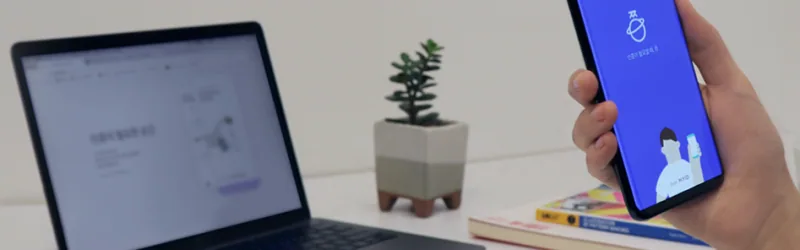
The app you need in order to use the Jeju Safe Code!
When you need to verify, there's Zzeung
- iOS : https://apps.apple.com/app/id1512732128
- Android : https://play.google.com/store/apps/details?id=com.iconloop.zzeung