This piece comes from the <Smart Policy> section of the Fall 2020 issue of Jeju, the provincial newsletter published by Jeju Self-Governing Province.
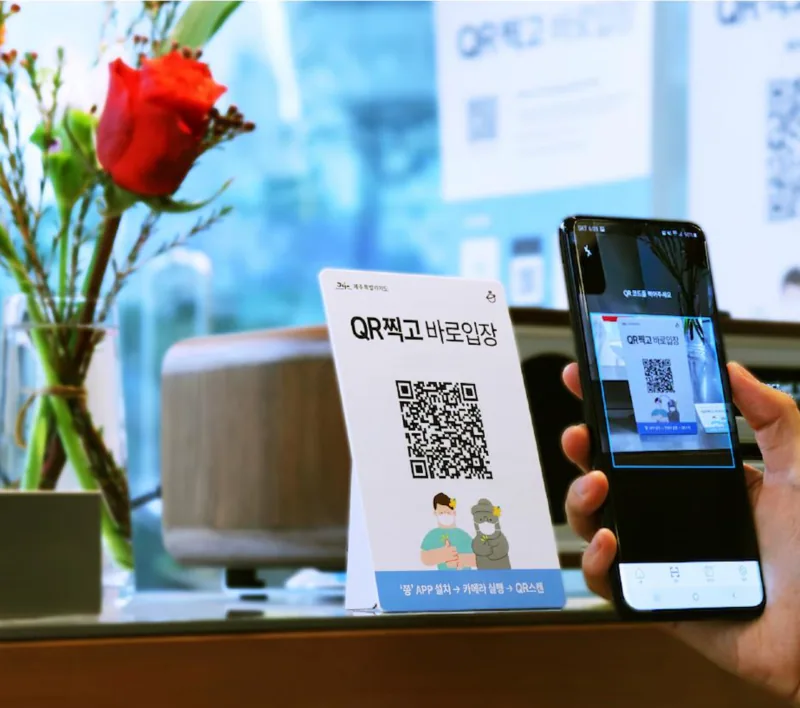
COVID-19 —
with 'Jeju Safe Code',
let's beat it with confidence
<Source: Jeju newsletter, Fall 2020 issue, read it here >
Handwritten entry logs, introduced because of COVID-19, have recently been abused in some troubling incidents, and paper logs are inconvenient enough that both visitors and business owners have raised complaints. As part of its COVID-19 response, the Central Disaster Management Headquarters under the Ministry of Health and Welfare therefore rolled out the electronic entry log (KI-Pass) mobile app from June 10 and recommended its use at high-risk facilities (13 business categories) and at higher-risk multi-use facilities. But the app had to be installed separately, which was a hassle for venues, and it proved of limited practical use in epidemiological investigations — so Jeju Province developed its own improved version, 'Jeju Safe Code'.
Here is a look at 'Jeju Safe Code', the Jeju-style tourism and quarantine system that was pilot-tested at public institutions through September and October and is set for full rollout to the private sector in November.
What is 'Jeju Safe Code'?
'Jeju Safe Code' is a mobile authentication code system designed to make epidemiological investigation more efficient when a COVID-19 case emerges, and so to minimize the secondary and further transmission that follows from an infected person. Where the existing KI-Pass (electronic entry log) took several days to request and receive entry records and was of limited use against multi-site or cluster infections, 'Jeju Safe Code' was built on top of an epidemiological investigation system that can look up a confirmed case's visit history and contacts immediately. It also shortens the time it takes to generate and verify a QR code, making it easier to use for visitors and business owners alike, while its use of decentralized identifier (DID) technology keeps intrusion on personal data to a minimum.
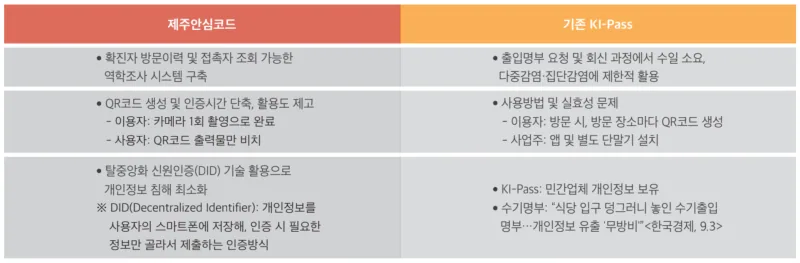
The rollout plan for 'Jeju Safe Code'
Ahead of the November expansion to the private sector, 'Jeju Safe Code' is currently in pilot testing at public institutions. It has been deployed at the main entrances of 405 locations across the island (for public officials and residents): 209 government offices including the provincial office, city halls and eup/myeon/dong community centers, plus 196 public facilities including public health centers, publicly run tourist sites, libraries, art museums and Yangji Park — and QR code verification is being carried out on entry. In early September, after completing a demand survey covering the province, the administrative cities, the eup/myeon/dong offices and their facilities, the province ran video training for public officials, encouraged them to install the app, and distributed 'Jeju Safe Code' along with adoption guidance to every public institution on the island. During October the scope was widened to ordinary residents such as users of public institutions and people visiting on official business; once feedback on problems and future improvements has been gathered from the pilot institutions, the plan from November is to put 'Jeju Safe Code' into active use across every part of the island and at the relevant facilities in the private sector.
From November, high-risk facilities will — barring special exceptions — be standardized on 'Jeju Safe Code' in place of the electronic entry log system (KI-Pass) they have been using, in order to prevent confusion among residents and to make epidemiological investigation genuinely effective; for facilities under gathering restrictions, the province will actively encourage the adoption of 'Jeju Safe Code' when they introduce an electronic entry log. Active promotion is also under way to bring 'Jeju Safe Code' into the tourism sector for visitors arriving on the island. The province is stepping up promotion to owners of restaurants, cafés and tourist sites that visitors frequent and encouraging them to display QR codes, while sending guidance and installation links attached to flight reservation texts, KakaoTalk messages and the like aimed at travelers. It also plans to make active use of institutional social media, emergency alert texts, advertising on public buses and other channels.
COVID-19 cannot be overcome through the sacrifice of a handful of individuals, nor through the efforts of any single institution. Everyone's wisdom, cooperation and attention are the only way to beat it. However good the vaccines and treatments that get developed, no fast-spreading infectious disease can be defeated without rigorous management and systematic prevention behind them. It may have come a little late, but the development and adoption of 'Jeju Safe Code' can serve as one more line of defense against the spread of infection, and that is welcome news. Gathering attention and wisdom from the smallest things, may we all come through COVID-19 together and in good health.
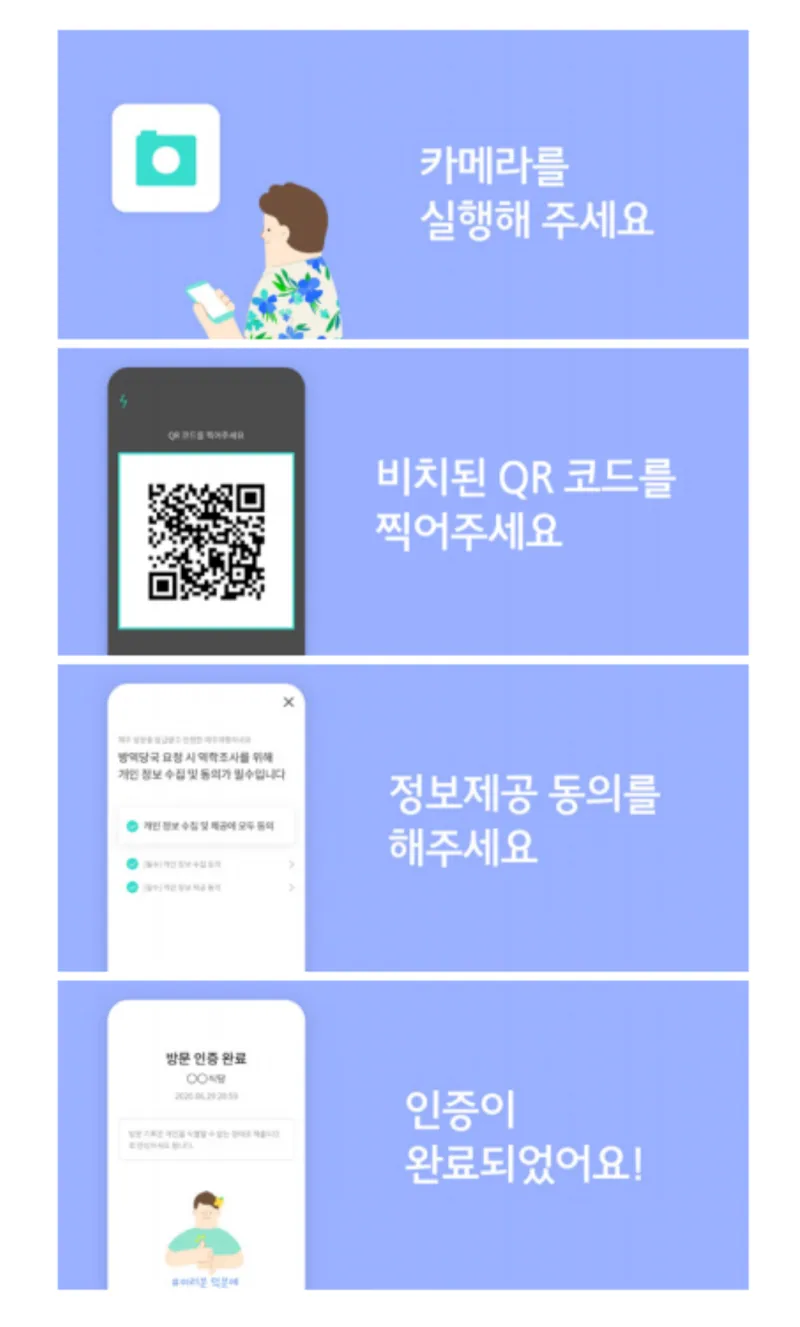
How to use 'Jeju Safe Code'