

The Jeju-style tourism epidemic response system is now running as a pilot across the island
Since signing a business agreement with Jeju Self-Governing Province on August 19 to build and promote a Jeju-style tourism epidemic response system, ICONLOOP has installed that system — developed to trace confirmed cases among visitors — at 60 provincial government sites and 44 private businesses, where it is now in pilot operation.
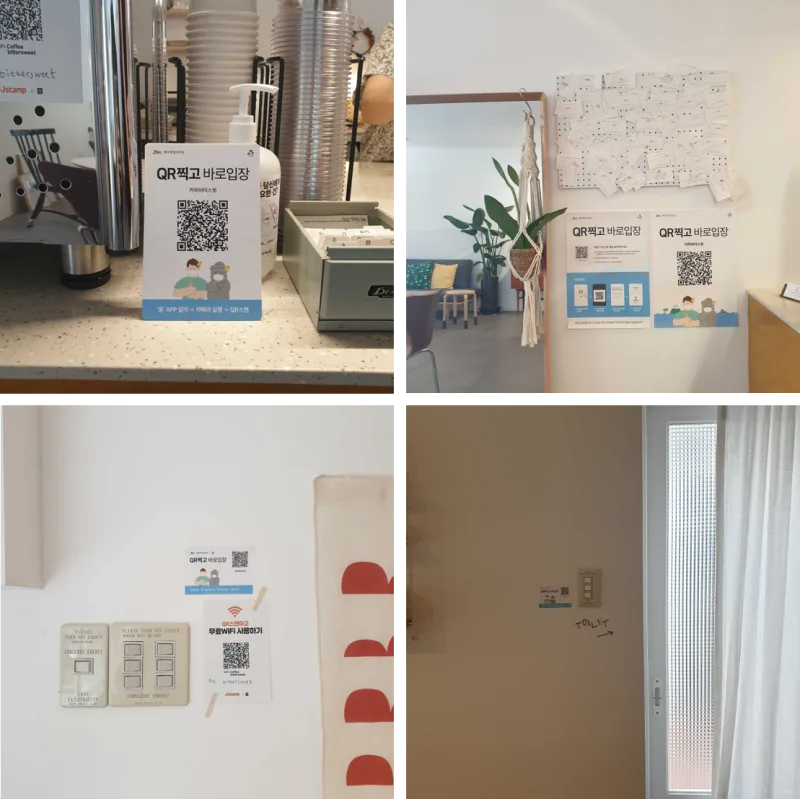
With the recent resurgence of COVID-19 raising the need for electronic entry logs not only at high-risk facilities but at ordinary businesses too, the pilot has confirmed both a positive response to the Jeju-style tourism epidemic response system and the stability of the service itself.
After the pilot, the system is set to expand to businesses across the island. Once it has settled in, the plan is to consult with the relevant departments and consolidate every business on Jeju onto the system, managing it on an ongoing basis to make it more useful still.

Why did Jeju Province and ICONLOOP build a tourism epidemic response system?
Jeju is Korea's signature tourist destination. Unlike a local community where the same residents come and go, it takes in a heavy inflow of outside visitors, and by the nature of tourism those visitors range widely and are highly likely to end up in crowded places such as popular restaurants and tourist sites. That creates the risk of gaps in disease control and difficulty tracing movements when a case emerges — so there is a need to extend entry verification services beyond cluster-risk venues such as nightlife establishments to the places tourists actually visit, and the verification method itself has to take the convenience of businesses and visitors into account as much as possible.
The Jeju-style tourism epidemic response system that Jeju Province and ICONLOOP have now developed through public-private cooperation uses blockchain decentralized identifier (DID) technology, so a user can verify a visit simply by scanning a QR code posted at the venue (the phone's own camera is enough to capture it). It removes the burdens that usually come with adopting a visit verification service — buying equipment such as QR code scanners, assigning extra staff, queues forming at the point of verification, the hassle of generating a fresh QR code for every check-in — which lightens the load on business owners and maximizes convenience for users. And because verification is based on de-identified information, it protects user privacy while building a fast, accurate disease-control system. Going forward, users who complete a visit verification will be surveyed about the venue's hygiene and disease-control practices, and those results will be used to designate and highlight exemplary venues (clean zones), so that tourists can enjoy Jeju in a safer environment — the goal being a sustainable model for tourism and disease control in the age of COVID-19.
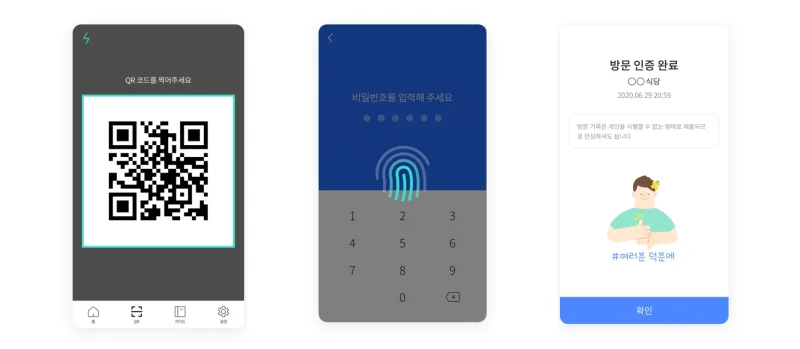
What about my personal data? Is someone tracking and monitoring where I go?
When a visit is verified, the Jeju tourism epidemic response system uses DID (Decentralized ID) technology: de-identified information stored on your own device is checked against the blockchain to confirm it has not been tampered with, and only then submitted — which keeps exposure of personal data to a minimum.
All identity information and visit records stored on the server are also encrypted and physically distributed across separate stores, so that an individual's movements — their privacy — are never exposed.
That encrypted, physically distributed identity and visit-record information can only be viewed by authorized personnel, such as Jeju Self-Governing Province epidemiological investigators and other relevant health authorities, and only on the legal basis of the Infectious Disease Control and Prevention Act. Collected information is automatically destroyed after a set period — identity information is kept for 8 weeks and visit records for 4 weeks, in line with the time an epidemiological investigation takes — and no personal data whatsoever is written to the blockchain.

Can the Jeju tourism epidemic response system help us beat COVID-19?
The system is expected to dramatically shorten the time epidemiological investigation takes within the existing case-tracing process under the Infectious Disease Control and Prevention Act. When a case is confirmed, the health authorities of Jeju Self-Governing Province can identify the person's movements and contacts through an epidemiological investigation.
Until now, disease-control authorities have done everything they could — statements from the confirmed case and the people around them, CCTV footage, card transaction records, GPS data, every available means — and it has still been difficult. With the Jeju-style tourism epidemic response system in place, provincial epidemiological investigators can look up a confirmed case's visit history and contacts immediately through the server holding those records, which should make rapid disease-control measures, such as isolating contacts, possible in a fraction of the time.
ICONLOOP will keep working with Jeju Province to raise convenience for users through blockchain technology while rigorously protecting personal data and privacy, so that together we can prepare for and lead the post-COVID era.
Innovation for tomorrow, through technology — we hope you will follow and support ICONLOOP and Jeju Province.